
Future of Hydropower in France: Let’s Learn All the Lessons from the Engie Case with Belgium’s Nuclear Fleet
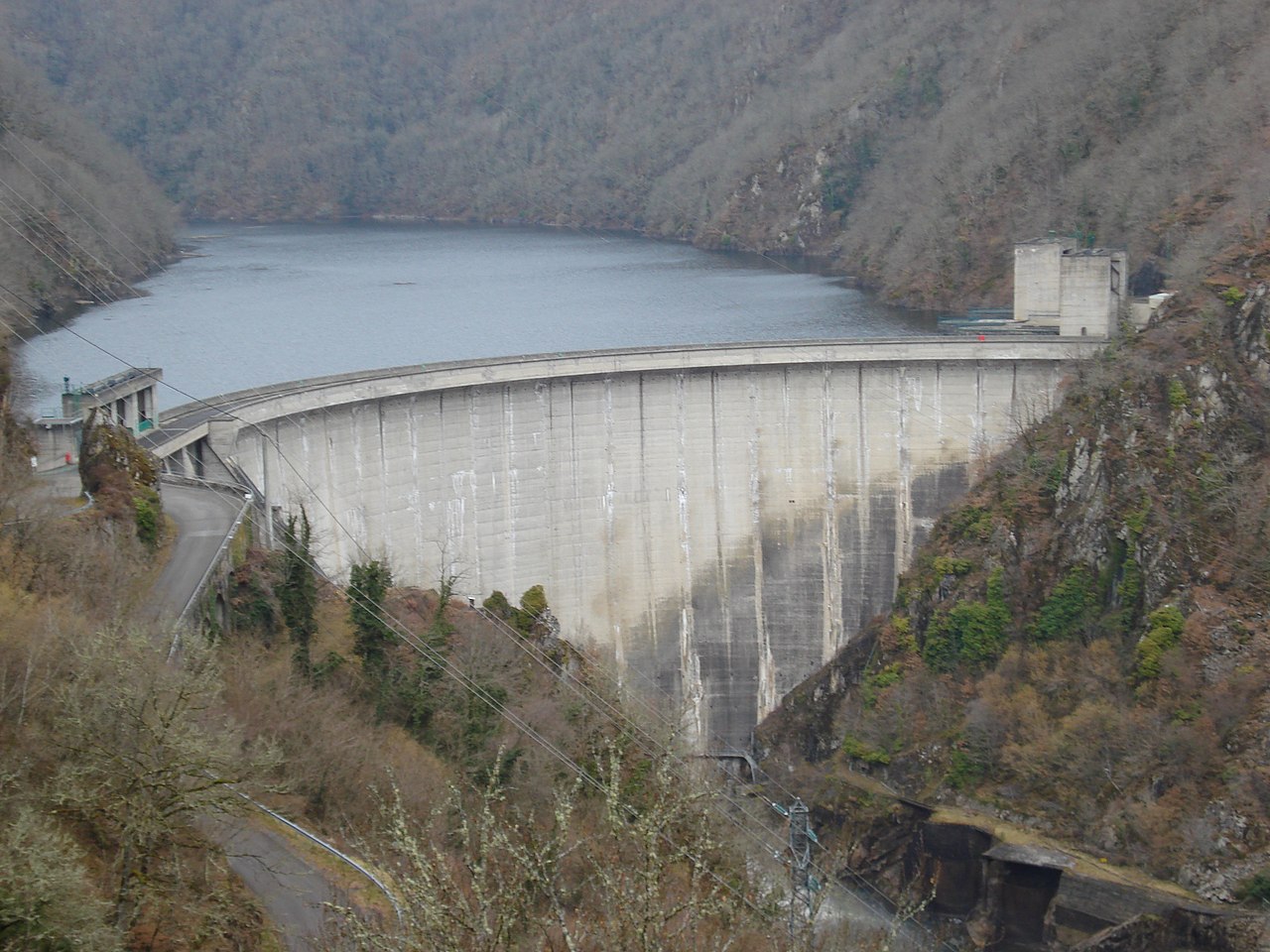
We are about to hand over one of the key pillars of our electricity system—the hydropower fleet operated by SHEM and its storage potential via pumped-storage plants (STEP)—to the private operator Engie. Belgium tried this approach before us with its nuclear fleet. An experience that has proven costly, and one they are now attempting to reverse—at what may be an even higher cost.
Belgium is currently facing a strained energy situation: a growing role for gas in its electricity mix, massive electricity imports (particularly from France), an increasing frequency and scale of negative price episodes (with no positive impact for consumers), and high electricity costs for Belgian industry.
In this context, the Belgian Government and Engie announced late last week that they had entered into exclusive negotiations for the State to buy back the seven nuclear reactors operated by the French company.
The letter of intent states:
“ Cette initiative reflète la décision stratégique du gouvernement belge d’assumer la propriété directe des actifs nucléaires du pays, conformément à son ambition de prolonger l’exploitation des réacteurs nucléaires existants et de développer de nouvelles capacités nucléaires en Belgique. Ce faisant, le gouvernement belge prend sa responsabilité sur le futur énergétique à long terme de la Belgique, avec pour objectif de bâtir une activité financièrement et économiquement viable, soutenant la sécurité d’approvisionnement, les objectifs climatiques, la résilience industrielle et la prospérité socio-économique. ”
Why, then, can this responsibility apparently not be entrusted to Engie?
Because it is not in the company’s interest. Because nuclear power is no longer among the Group’s strategic priorities. Because the required investments are significant and long-term.
Because the purpose of a private operator is not the general interest.
This decision by the Belgian Government marks a turning point in our neighbor’s energy policy. The conclusion of this agreement, expected in October 2026, would bring to a close a long-running saga illustrating the challenges of having strategic industrial assets—essential for ensuring security of supply and national energy sovereignty—operated by a private entity.
Although Belgium decided to phase out nuclear power in 2003, implementation has been repeatedly postponed over the years to safeguard the country’s energy supply. Meanwhile, Engie announced in 2010 a shift in its industrial strategy and its intention to withdraw from nuclear operations in Belgium.
However, the 2022 energy crisis, strong public support for nuclear energy, and the election of a pro-nuclear coalition have changed the situation. Belgium has revised its strategy, and the Government entered negotiations with Engie to extend the operation of the two most recent reactors.
These negotiations are taking place in a difficult context: Engie has already made it clear that continuing nuclear operations in Belgium is no longer a strategic priority.
Today, to maintain its fleet and consider building new reactors, the Belgian Government must go through a buyback process.
While Engie’s experience in Belgium has been shaped by political uncertainties, the fact remains that today the Belgian State finds itself in a position of relative powerlessness vis-à-vis a private operator whose decisions are not guided by the general interest.
From the operator’s perspective, Engie’s position is understandable: political uncertainty surrounding nuclear energy in Belgium, combined with the Group’s strategic refocus, has led to its decision to withdraw.
But from the perspective of society and the public interest, this situation is both abnormal and problematic. It is an issue the Government must address to ensure Belgium’s energy survival—and therefore its very survival—while being in a weak negotiating position. In this regard, it would be surprising if Engie were inclined to make concessions aimed solely at preserving the interests of the Belgian people.
The Belgian example should prompt reflection here in France, particularly regarding our hydropower fleet.
As detailed in our addendum to the January 2026 report, “Electricity Concessions: Proposed Solutions and the Legal Future of French Hydropower Plants”, SHEM—which operates hydropower facilities in the Pyrenees—is 100% owned by Engie, unlike CNR, where Engie is a key industrial shareholder alongside a majority public ownership (Caisse des Dépôts and local authorities).
If we are to meet the flexibility needs of the electricity system, massively electrify our uses, and build a sovereign, low-carbon energy system, it is essential to significantly expand pumped-storage hydropower (STEP), which provides large-scale energy storage.
However, these infrastructures require substantial investment and a long-term approach. Without public control capable of directing investment toward the general interest, it is difficult to imagine that Engie, as a private industrial operator, will independently take the initiative to move in this direction.
This is why the TerraWater Institute believes that within a framework based on an authorization regime—toward which we are heading following the adoption by both the National Assembly and the Senate of the bill “aimed at reviving investment in the hydropower sector to contribute to the energy transition”—it is absolutely necessary for SHEM to come under public control, following the model of CNR.
The issue of the regulatory framework for French hydropower facilities should therefore not be seen merely as a reform intended to resolve disputes with the European Commission. More broadly, it concerns the governance model of strategic infrastructure for the energy transition, our security of supply, and ultimately our energy sovereignty.