
2024-2026 Program
01.
Pumped Storage Hydropower (PSH) at the Heart of the Energy Transition
October 14, 2025 – Publication of Volume 1 “Principles and Generalities of WWTP Operation” and Volume 2 “Pyrenees”
First half of 2026 – Publication of Volume 3 “Alps” and Volume 4 “Massif Central and Jura”
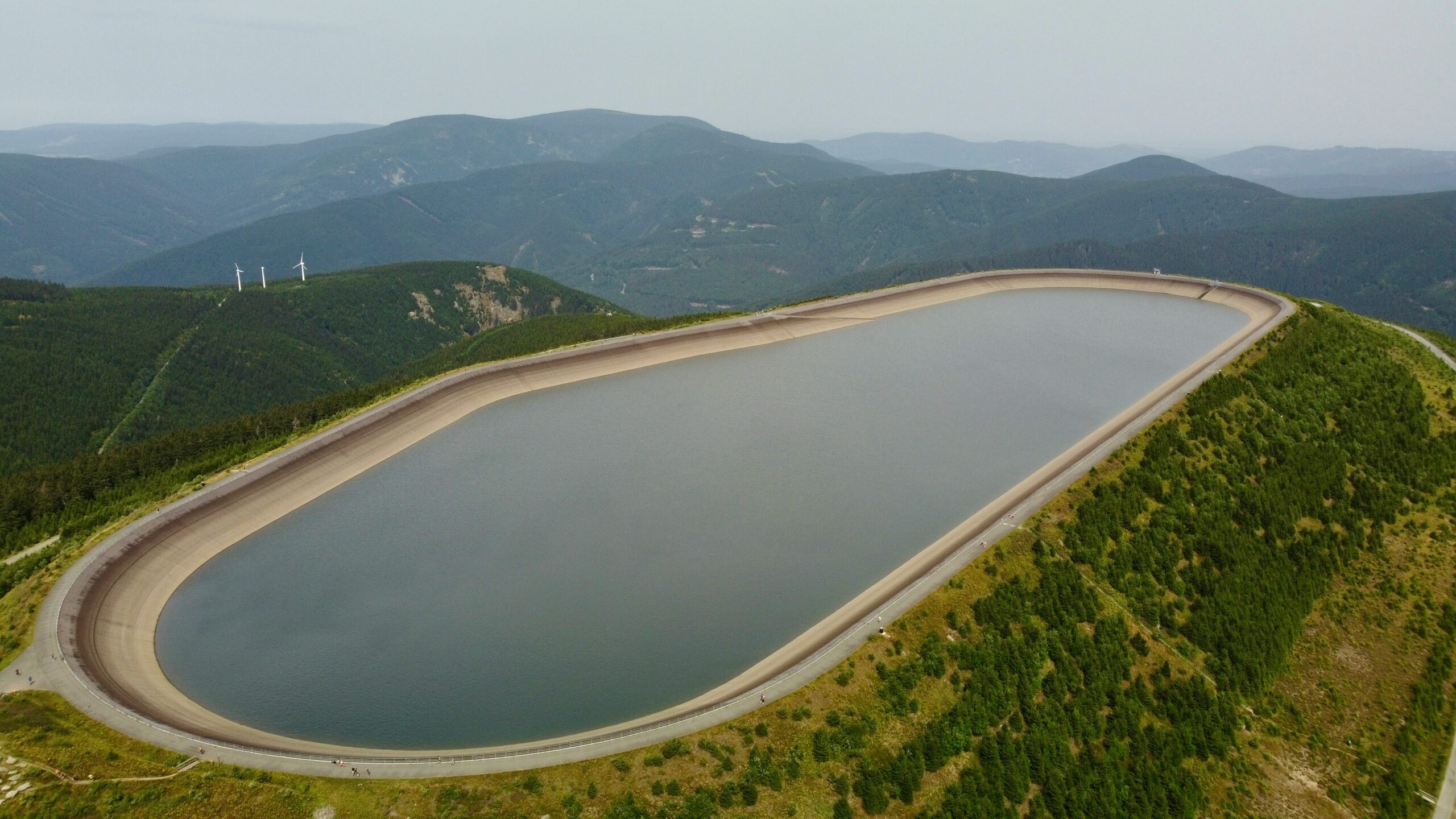
The TerraWater Institute firmly believes that pumped storage hydropower (PSH) must play a central role in the energy system of tomorrow. These infrastructures enable large-scale electricity storage in a mature, controllable, and environmentally respectful form, directly addressing the challenges of flexibility and grid reliability in a decarbonized power mix.
PSH facilities are far more than technical add-ons: they are strategic tools for ensuring grid stability, reducing losses from excess generation, and facilitating the integration of low-carbon energy sources. They also support long-term industrial investment, regional development, and national resilience.
In this context, the Institute is launching two key initiatives in 2025:
- Engage with local elected officials and stakeholders in regions where PSH projects have been identified, to foster constructive dialogue, anticipate concerns, and build public acceptance based on transparency and listening.
- Draft a comprehensive four-volume report laying out TerraWater’s vision for the development of PSH in France.
Publication Timeline:
- First half of 2025: Volume 1 “Principles and Mechanisms” and Volume 2 “The Pyrenees”
- Second half of 2025: Volume 3 “The Alps” and Volume 4 “The Massif Central and Jura”
This work aims to reposition PSH as a cornerstone solution, fully aligned with the scale of the
energy transition challenge.
02.
A Decision-Making Tool for New Nuclear End-Users
2nd semester 2026
Amid the dense landscape of nuclear energy options, TerraWater is developing a decision-support tool tailored to large industrial electricity consumers seeking to decarbonize their energy supply. Designed to be technology-neutral, this tool combines technical analysis, regulatory trajectory, and economic modeling to identify the most suitable nuclear solutions for each specific site.
The first application is being carried out with DP World, in collaboration with Core-Power, a leader in floating nuclear technology. The project has a dual objective: to determine the optimal low-carbon nuclear solution for the site, and to design a realistic pathway to implement it while minimizing the risk of “investment regret.”
The study will result in a generic, replicable tool—owned and developed by the TerraWater Institute—that can serve as a reference for other industrial sites looking to lead the nuclear-powered energy transition.
The broader ambition is to strengthen dialogue between industry, technology providers, and regulators ahead of major investment decisions. By building a robust and adaptable methodology, the tool aims to address the current uncertainties that limit the adoption of nuclear electricity in energy-intensive sectors.
Ultimately, the tool will offer industrial stakeholders a strategic compass to incorporate nuclear power into their long-term decarbonization strategies, in a context of increasing regulatory pressure (CSRD, EU taxonomy) and growing demand for carbon-free electricity.

03.
Germany: an assessment of the Energiewende decarbonation pathway to 2050 and its alternative scenario: The Germany TerraWater scenario – the stages of a low carbon Germany”
1st semester 2026
Building on the rigorous methodology and positive reception of its first national energy scenario, published in November 2022, the TerraWater Institute has chosen to extend its expertise beyond France. Its aim: to present a vision of the energy transition tailored to Germany’s specific context—combining climate ambition, industrial strength, and technological pragmatism.
This new scenario seeks to illuminate the major structural decisions Germany must face in the coming years, as it moves away from fossil fuels while safeguarding energy security. It will:
- Highlight the benefits of civil nuclear power in a sustainable decarbonization strategy, both from a climate and economic perspective.
- Raise awareness among policymakers and private stakeholders of the importance of pumped storage hydropower (PSH) to enable large-scale electricity storage and
stabilize the grid. - Provide clear guidance on the trade-offs between direct electrification, hydrogen production, and the complementarity of renewable and dispatchable energy sources.
The scenario will be based on robust data, transparent modeling, and realistic assumptions. A synthesis report will be published in the second half of 2025, targeting German and European decision-makers, as well as industrial stakeholders.
04.
Update of the TerraWater Scenario – Version 2.0
2nd semester 2026
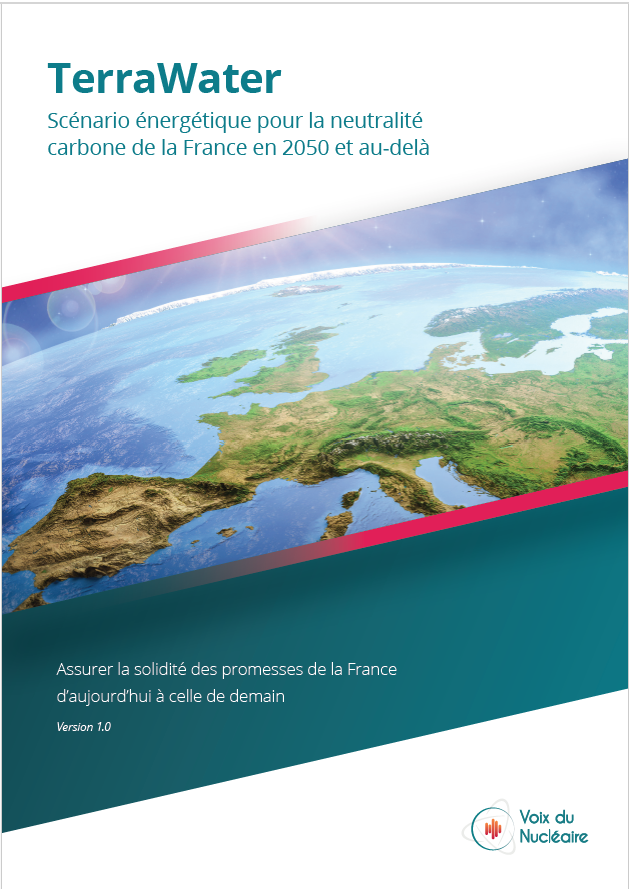
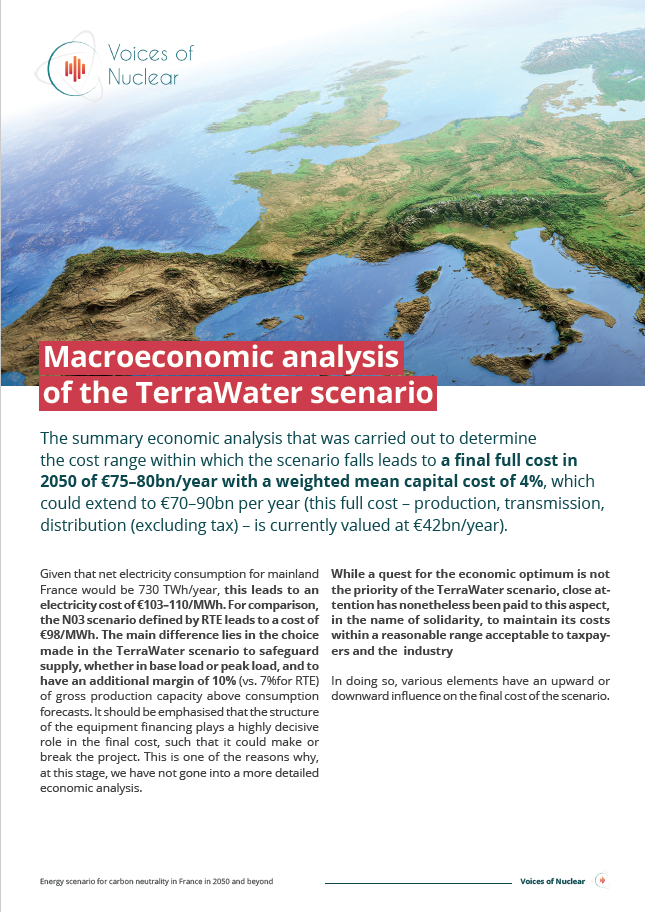
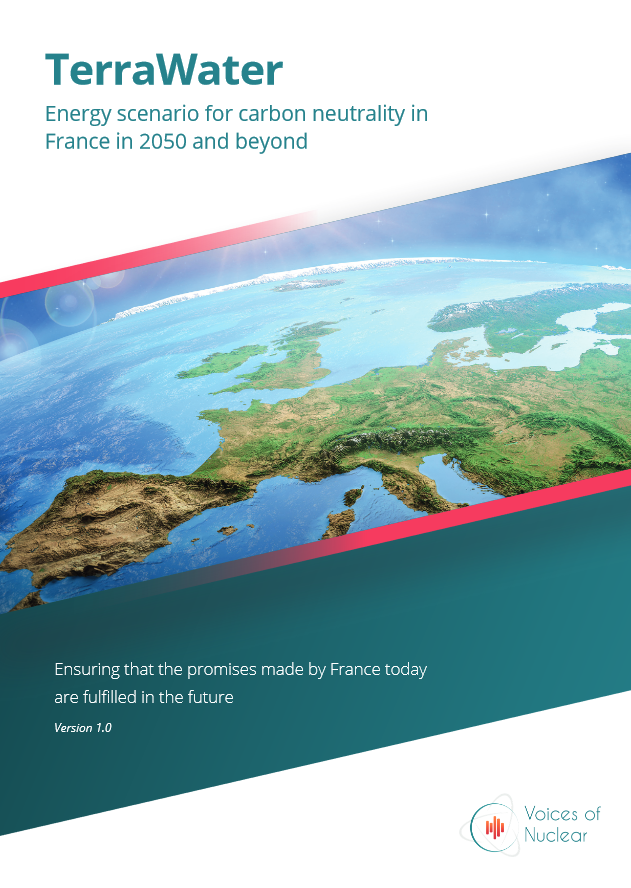
The application of TerraWater’s guiding principles again demonstrates in version 2.0 that the most effective way to achieve a successful energy transition is to rely on the nuclear–hydro combination for electricity generation, rather than betting on technologies that are not yet mature.
-
Improved modelling of planned nuclear reactor outages
-
Streamlined development strategy for PHS
-
Integration of new technologies (district heating, nuclear cogeneration)
-
Expanded data sets, particularly regarding weather-year variability
-
Updated baseline and consumption profiles as of January 1, 2025
Publication 
Expected date: October 2025
Publication formats:
- A full report with annexes
- Open access publication on the Institute’s website
- A public event to present key conclusions
Business and Institutions
Join the Terrwater club and contribute to its work
Because technology is applied science, theorists (scientists, experts) and practitioners (industrialists, institutions) must work together to ensure the success of the energy transition.
The program
The main activity of the TerraWater Institute is to carry out independent studies on the necessary evolution of the European energy system, with necessarily global resonances given the universality of the physical principles applied.
The research topics are chosen by the TerraWater Institute, on its own initiative and based on suggestions from the public, its advisory committees, and its partners. They are carried out independently, with the help of its own network of experts and contributing volunteers.
To ensure the rigor of the proposed analyses, the TerraWater Institute systematically submits – throughout its process – its analyses and conclusions to the counter-expertise of specialists and experts, including members of the industries covered, without this affecting its choices other than by ensuring the realism of its hypotheses.
Creation of the TerraWater Club with its funding patrons
Beyond the initial companies and partners who have chosen to support the creation of the TerraWater Institute, a fundraising campaign with businesses and individual donors is in preparation (2023-2024).
The aim of this campaign is to give the Institute the capacity to carry out its mission, initiate the studies outlined in the program, and support the dissemination and popularization of the challenges of the energy transition.
You are an individual
Make a monthly or one-time donation to empower the TerraWater Institute to build itself and continue the development and dissemination of the TerraWater scenario. Your donations are eligible for a tax deduction or a reimbursement of up to 66% of their amount.
You are a company
Become patron or great patron to join the companies and institutions supporting the Institute, through financial contributions or expertise sponsorship. Within the club, the Institute fosters dialogue between theorists (scientists, experts, institutions) and practitioners (industries, public actors, associations) to build the necessary consensus for accelerating the energy transition.